


Horrors of a Victorian Dead House: A Morgue Keeper's Nightmares
In 1887, a morgue superintendent in St. Louis shared his stories anonymously. Historians believe the man was Herman Praedicow (1831-1891). His tales are filled with flickering gas jets, restless dead, and a ghost said to linger among the slabs. They are also filled with real crimes: jealous lovers, a trunk that gave off a terrible smell, and a vain impostor who tried to escape justice by sailing to the other side of the world. Step inside the dead house, if you dare.


The Dead House Files
“My first night in the morgue I shall never forget — in fact, the first month was so full of horrors I wonder how I ever got through it.”
So began the confession of a St. Louis morgue superintendent in 1887. He gave no name, but those who study the tale believe the voice belonged to Herman Praedicow (1831-1891).
The Man Who Wrote His Own Death
Before the superintendent took his post, the morgue had another keeper. When a change of administration cost him his job, he could not stay away. Every day he drifted back down to the cold rooms to linger among the bodies.
One night he swallowed a dose of cyanide of potassium and sat at his table to record what dying felt like. He managed only a few sentences before he toppled over, dead. His spirit, it is said, never left.
The First Cases
One of the coroner’s earliest cases was a “floater” laid out in a pine box. The box was already weeping slimy ooze that pooled in a slick puddle beneath it, and the body had begun to smell. He had to search its pockets anyway.
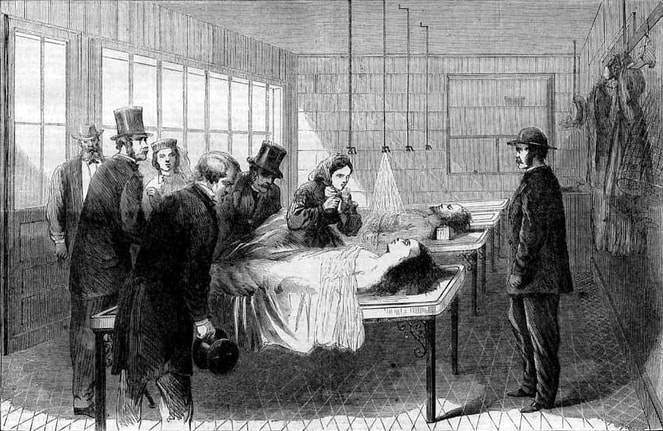
He took the job in the summertime, when the morgue filled with floaters and with victims of the heat. His duty was to remain on the premises all night, receiving the dead and releasing them to friends or family. Between deliveries, he napped on a lounge in the back, beneath a shelf of strange company: two or three infants preserved in alcohol, and a man’s heart, pierced by a knife blade and sealed in its own jar.
The Night the Skull Moved
The gas jet flickered across the jars. The infants seemed to grin at him. Their little chests seemed to rise and fall, and the heart seemed to palpitate.
Then he heard it: a strange clacking, crunching noise, like teeth knocking together. He looked up at the skull on the shelf above him. Its jaws moved, and something flashed behind its eyes. It teetered on the edge, fell, landed on a feather duster, and rolled toward him, still clacking.
He seized it, and a large insect flew out.
Learning to Sleep Among the Dead
In time, he trained his nerves to let him rest when he could. Even so, explosions woke him two or three times. He would hurry to the dead room and find that a floater had burst and splattered the walls, and he would slip as he crossed the floor. On other nights rats got among a coffin full of bones and set up a horrible clatter. There was nothing to do but drive them off.
Now and then he heard voices murmuring in the dead room. He would look in and see the shapes of men standing in the gloom. When he turned up the light, they were only the clothes of the “unknown dead,” hung on the wall for identification.
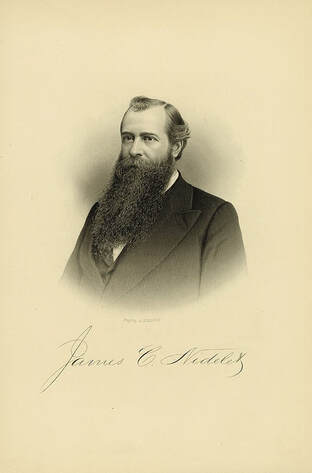
He also watched the medical examiner complete many autopsies. They were performed by Dr. James C. Nidelet (1833-1910), who had served as Chief Surgeon under General Price in the Confederate Army before coming to St. Louis.
Case One: The Brothel Shooting
In 1885, the superintendent received the bodies of Tom Bostwick, 36, a saloon keeper, and Mamie McGue, whose real name was Mary Guerin. Bostwick had died by his own hand at Madame North’s, a well-known brothel, from a self-inflicted gunshot wound. He carried a cut on his hand and five wounds on his body, which suggested that his victim had fought back.
The story behind the crime was this. When the two arrived at Madame North’s, Mary asked for a room downstairs, but Bostwick insisted on going up. He seemed to suspect she would try to escape the murder-suicide he had resolved to carry out that day.
Mary claimed to be about 27 and married to a man who worked at Hilton’s restaurant. She had come to St. Louis around 1881 and worked at Mollie Hines’ house. The coroner called her an “outcast,” a euphemism of the day for a prostitute.
Her past held its own complications. A man once came from Illinois with a requisition for her arrest on a charge of stealing silverware. She was arrested and handed over to a Mr. Carroll, who represented the Springfield courts and claimed to be related to her by marriage. Carroll ran out of money before he could get her to Springfield. She drifted back to St. Louis, where the police declined to arrest her again.
Amid the scandal, Bostwick’s wife arrived from Cincinnati and identified her husband at the morgue. She confirmed he was a barkeeper by trade. He had told her that Mary Guerin pursued him relentlessly and was the cause of all his troubles. He had never said a word about killing himself.
J.B. Guerin, Mary’s husband, came to the morgue too, plainly grief-stricken. He testified that they had been married 15 months and that his wife had complained that Bostwick threatened to kill her for refusing to marry him. He had known her as a widow, Mrs. Goodwin, though her real name was Edwards, and she was no widow at all. She had always behaved as a good wife, and he had no idea she was living a double life, unfaithful with a saloon keeper she knew from her days as a prostitute. Bostwick, it was said, had also beaten Mary several times.
The coroner described Lizzie Bostwick as staring at the dead Mary Guerin with intense hate. Asked whether she would bury her husband, she answered, “No, those who got his money can bury him. I will not.”
The inquest reached its verdict:
“We, the jury, find that the deceased Mary Guerin came to her death at about 5:30 o’clock p.m. February 26, 1885, in the second-story front room of No. 116 N. Ninth Street, from internal hemorrhage, the result of a gunshot wound to the chest inflicted by a ball fired from a pistol in the hands of one Thomas Bostwick, and we the jury, find that the said Thomas Bostwick (now deceased) was responsible for the death of said Mary Guerin.”
The Living Who Came for the Dead
Over the years, the coroner saw families arrive to claim and bury relatives they had not seen in years. He watched women fight like tigers over the corpse of a man who, in life, was not worth his salt. Some men came to claim a woman’s property but would never bury a woman to whom they had been “attached by any of the ties unrecognized by the law.”
Visitors came for days on end. By their manner you could tell they were afraid, yet anxious to find the person they were looking for.
Case Two: “You’ll Have Her Here Tonight”
One day the coroner was sitting on the morgue steps when a man approached just after a woman had left, having asked about the bodies.
The man asked, “Know that woman?”
“No,” the coroner replied.
The man said he was following her, and “If I find anything out, you’ll have her here tonight.”
Then he left. Two hours later, the woman was carried into the morgue, dead. The man had kept his word. He had shot her in their home on Gratiot Street. His name was Milton Neal Betts, and hers was Nettie Hayden. She was 29. He was 20 years older than her, and suspected her of infidelity.
Jealousy seemed to be the motive. Each was married to someone else, yet they had lived together for five years and had five children. Neal, who had worked as a car porter at the Pullman Palace, was charged with second-degree murder. In 1887, he was sentenced to 10 years in the penitentiary.
At trial, Neal testified that the shooting was an accident, that Nettie had attacked him first. But Nettie’s 10-year-old son, Haggie Hayden, told a different story. He said he saw Neal push his mother behind a door and shoot her.

Case Three: The Trunk in Room 144
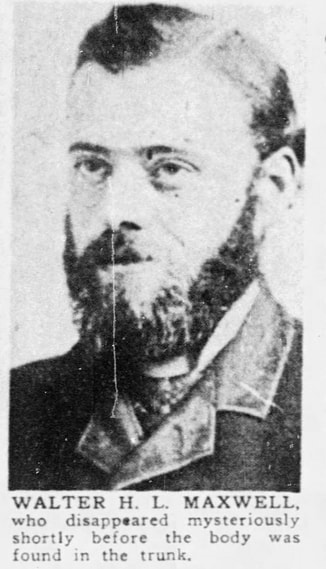
Then there was Dr. Maxwell Lennox, a man described as a “dude from the sole of his foot to the crown of his head.” He wore his hair banged like a girl’s, and his manners were so effeminate that he walked with short, mincing steps. Before every meal he would arrange his hair, touching it up delicately and puffing out the curls.
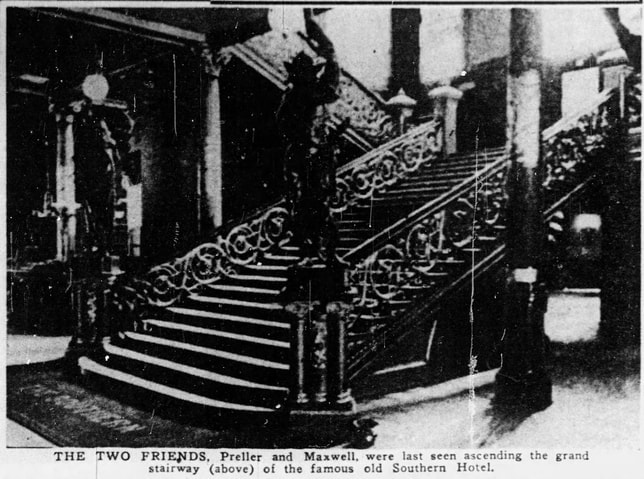
For several days he was seen in the company of Charles Arthur Preller at the Southern Hotel in St. Louis. Then Preller dropped from sight.
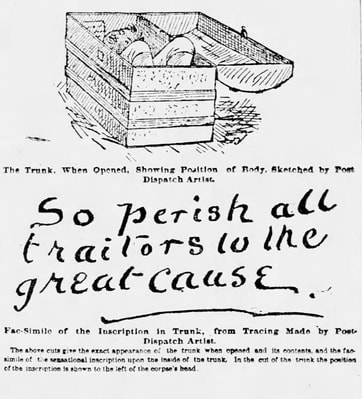
The discovery began with a foul smell drifting from Room 144. Three pieces of luggage sat inside, but the stench came from one trunk. By then the “doctor” had vanished. When the trunk was opened, the missing man was found. Preller’s mostly nude body was stuffed inside, wearing drawers too small for him and embroidered with the initials H.M.B.
A message was tacked to his head: “Thus perish all traitors to the cause.”
It was later determined that Lennox had left the note himself, hoping to pass the murder off as the work of some secret society.
According to the coroner, the body had lain in the trunk almost two weeks. The tongue protruded, large blisters covered both legs, and a cross had been carved into the flesh of the chest. Preller had died from chloroform purchased by the doctor. Decomposition had left him unrecognizable, so the coroner injected embalming fluid to restore his features.
The motive was robbery. In his haste, the killer left many clues. Most were useless trinkets belonging to Preller, but some revealed who he really was. His name and his title of doctor were both fictitious. From what police found in the room, his true name was Hugh Mottram Brooks. He had taken $700 in cash, jewels, and valuable papers from his victim.
Authorities learned he was bound for San Francisco, where he planned to board a ship for Auckland, New Zealand. He traveled as T.C. D’Auguier and, in San Francisco, posed as a Frenchman. At first he shunned attention, but he could not suppress his “peacock tendency.” He became the focus of many eyes, which “seemed to suit his vanity.”
What he did not know was that, while he sailed, the story of the murder had spread through newspapers around the world. Police were waiting on the dock in New Zealand, and detectives from St. Louis traveled there to bring him home.
At trial, Brooks claimed he had been treating his friend for a “private disease” and had accidentally used too much chloroform. The jury did not believe him and found him guilty. His parents, Samuel and Hannah Brooks, begged the governor for clemency, but there was no reprieve. On August 10, 1886, Brooks was hanged at the Four Courts before 200 witnesses, right next door to the morgue.
The Worst of the Dead
According to the coroner, the worst bodies to handle after the floaters were the victims of railroad accidents, who arrived mangled and torn to shreds.
One man, struck by a train near the cemeteries and dragged some 400 yards, came in a barrel. Nothing in the “horrible heap” could be recognized as human remains except a little finger. He was never identified.
Another man, run over at the mouth of the tunnel, had his head severed at the shoulder as cleanly as if by a knife. The coroner dressed the body and sewed the head back on. He hid the stitches beneath a high standing collar and dressed the man nicely. The dead man went home looking as if he had died in bed.
On other occasions, where bones had been torn out, he substituted wooden sticks and fastened the flesh around them
The dead house on Ninth Street has long since passed out of living memory, but the superintendent’s stories remain, as restless as the souls he guarded. The cyanide-poisoned keeper still lingers by his table, pen forever poised. The grinning infants and the palpitating heart still keep watch over a sleeper in the back room, while a skull rolls toward him across the floor, clacking its teeth in the dark. And in the gloom of the dead room, the empty clothes of the “unknown dead” still hang on the wall, waiting for someone to claim them. Perhaps that is the true horror of the place: not the floaters, nor the murders, nor even the vain doctor who thought he could outrun the hangman across an ocean, but the long procession of the nameless, and the living who came day after day, afraid yet anxious, searching for a face they dreaded to find. The superintendent learned to sleep among the dead. The rest of us, having heard his tales, may find it harder.
Postscript: The Keeper of the Dead
When Herman Praedicow, Deputy Coroner for St. Louis, died of pneumonia in 1891 at the age of 59, the newspapers had much to say about the man. He lived on Lemp Avenue, the same street as the haunted Lemp Brewery, near Arsenal Street. It seems fitting that a man so well acquainted with the dead should have made his home so near to restless spirits.
The stories told of Praedicow, it was said, would fill a big book. His long association with all that was ghoulish and ghastly had hardened him, and he went about the most disagreeable duties with the utmost nonchalance. Sights that sickened even the coroner and the attending physicians never so much as fazed the old man. “Many was the time he was known to eat his lunch while assisting in the work of post-mortem examination.”
He was also an inveterate joker. One of his favorite amusements was to arrange a corpse in the inner room so that a cold, clammy hand reached out to touch any unsuspecting intruder. Then he would invite his victim into the room and laugh in ghoulish glee as the scheme took hold.
His best joke, he claimed, came fifteen years earlier. A despondent tramp had hanged himself from a tree just inside the city limits, on the far side of Tower Grove Park. Word reached the morgue, and Praedicow went out to collect the remains. He had only a light buggy for the job. He cut down the body and bundled it into the seat beside him.
By the time he started back toward the city, it was dark, and he was alone with the dead. Passing a barroom, he stopped and hallooed for a drink. The saloonkeeper came outside. As Praedicow climbed down and started for the bar, the man asked, “Don’t your friend want a drink?”
“No, I guess he is too sleepy. You might ask him, however.”
The barkeeper approached the buggy, shouted in the dead man’s ear, and shook his shoulder. The body tumbled into his arms, laying a cold face against his cheek. The saloonkeeper ran back into the establishment, white with terror.
“Your friend is dead,” he gasped.
Praedicow burst into loud laughter, finished his beer, and set out for the morgue with his silent companion sitting bolt upright beside him.
If the dead of the St. Louis morgue ever did walk, perhaps they walked in good company.