


The Hatchet Bride: San Francisco’s 1915 Murderess
In the fog-shrouded autumn of 1915, the lodging houses of San Francisco still carried the echoes of the Gold Rush and the scars of the 1906 earthquake. Into this restless city came a young bride whose past followed her across the continent—and ended in blood on the second floor of a McAllister Street boarding house. What began as a confession of self-defense soon unraveled into a tale of secret lovers, blackmail, and a hatchet hidden in a kitchen drawer. This is the story of Mary Pamias, the woman newspapers called the Hatchet Murderess.

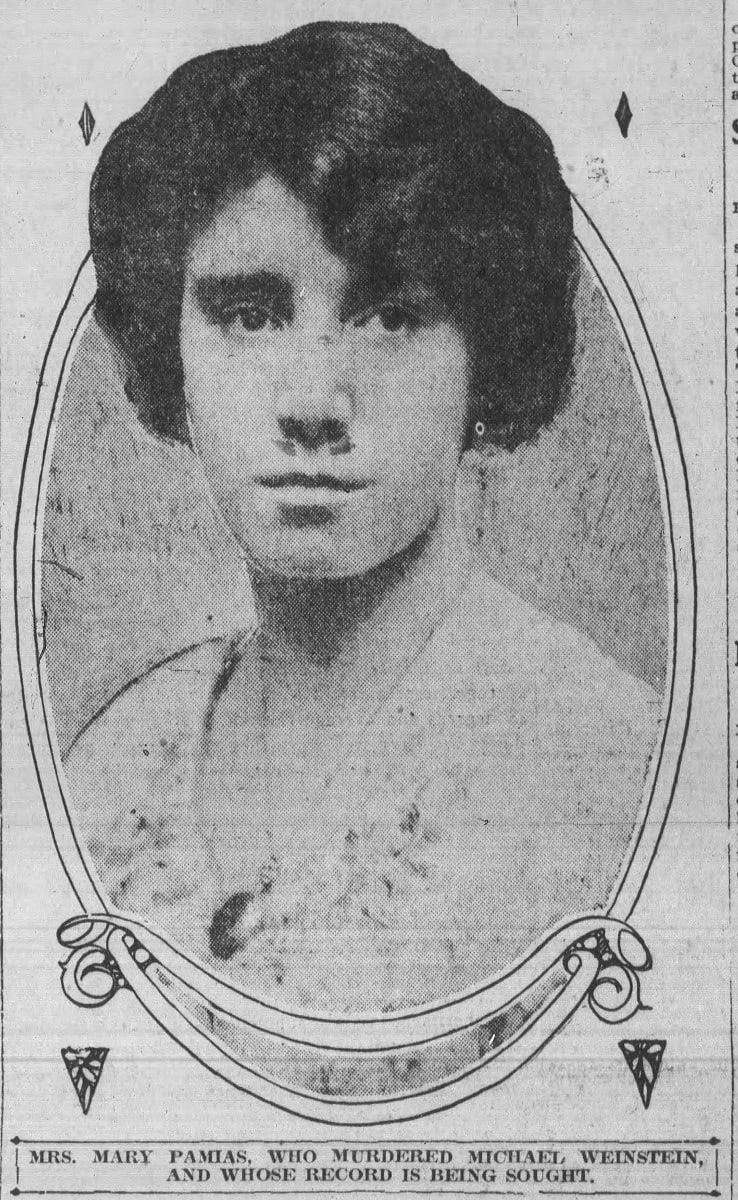
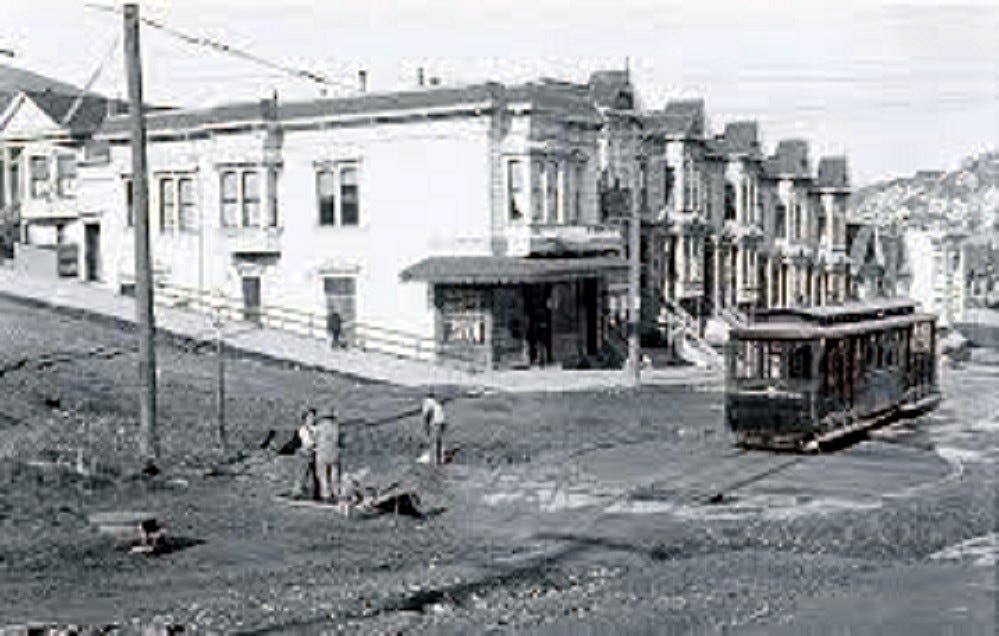
Blackmail, it is said, can turn cowards into heroes—or, on rare and terrible occasions, into killers. On a gray October day in 1915, Joseph Pamias, a conductor for the United Railroads, returned to the rooms he and his wife rented in a San Francisco lodging house. Mary, only twenty-two and a bride of three months, told him she wished to sleep elsewhere. When he pressed her, the truth spilled out: she had killed a peddler who, she claimed, had tried to attack her after she refused to run away with him. She wanted to flee the city. Instead, her husband took her to the police the next morning.
Detectives climbed the stairs to the second-floor front room and found the walls spattered with blood. At first there was no body. Then someone thought to open the box couch. Inside, neatly wrapped in newspaper, lay the dismembered remains of Michael Weinstein. Atop the parcels rested his wooden leg—he was a cripple—and the murder weapon itself: a hatchet.
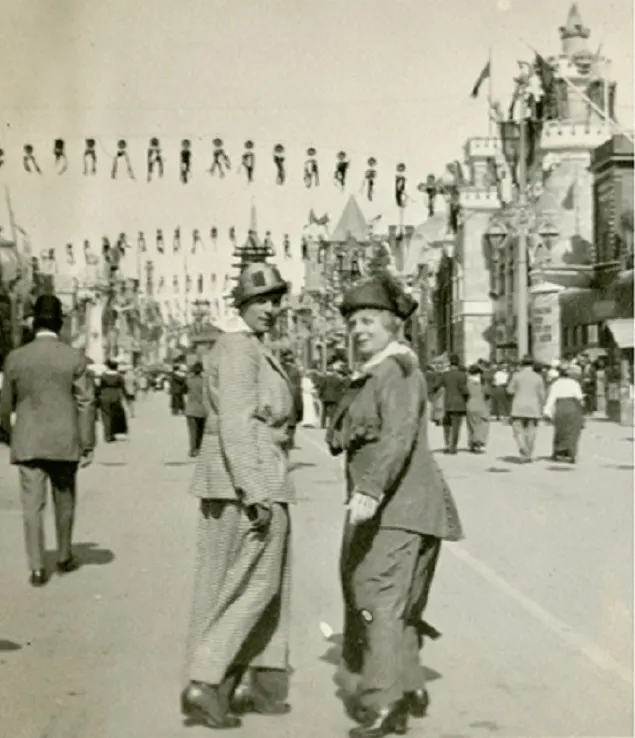
Mary’s first account was that of a frightened newlywed. She said her maiden name was Mary Boettcher and that she had once lived with her widowed mother in an Atlantic City lodging house. There, in 1911, she met a Jewish Russian émigré named Michael Weinstein, twenty years her senior. He was so taken with her that he insisted she stay for a time with him and his wife. She claimed the arrangement remained proper, that she grew closer to Mrs. Weinstein than to the man himself. Later her mother moved to San Francisco. In November 1914 Mary visited, met Joseph Pamias, and by February they were married. After the wedding, the Weinsteins wrote urging her to visit. She went for a short stay. Soon afterward, Mrs. Weinstein wrote that she had left her husband for good. Then Michael announced he was coming to California.
Feeling obliged after her earlier hospitality, Mary welcomed him. She even took him to dinner with her husband. During one visit, he entrusted her with certain “valuable papers.” Then, she said, he appeared one night while she was alone. He pressed two hundred twenty dollars into her hand and told her to buy something pretty. When she laughed and refused to leave with him, he grew insistent. He tried to embrace her. She ran to the kitchen, seized the hatchet she kept there, and warned him to go. He raised his crutch as if to strike. She swung first.
His body fell beside the couch. Realizing he was dead, she cut him apart and packed the pieces into the very box where he had collapsed. After that, she claimed memory failed her—until her husband insisted they go to the police. Questioned about the papers, she first said she had burned them, then that she could not remember, then that they had been worthless. Detectives noted the strangeness of it all: Weinstein was missing an arm and a leg; she could easily have fled and called for help.
Within days the story began to fray. A watch stopped at 12:40 showed the blow had fallen shortly after noon, not at night. Mary claimed she left the house within an hour of the killing, yet medical estimates suggested the dismemberment alone would have taken more than two hours. The deeper truth emerged. Weinstein had been her lover. He possessed love letters and a photograph of her kept in his watch, and he was using them to blackmail her. On the night in question, he had gone out with her husband, then returned alone. She demanded the letters and the picture, terrified Joseph would learn of the affair. When Weinstein refused, she struck him with the hatchet.
Unable to force the body into the box couch, she first placed it in a trunk. That evening she told her husband the truth; he did not believe her. The next day, alone again, she finished the work, packed the pieces into the couch, and went out to rent a room, already planning her escape. Only when Joseph refused to leave with her did he discover the evidence and bring her to the police.

Even this version proved incomplete. A telegram from the police at Atlantic City revealed that her real name was Mary Hurd of Bridgeport, Connecticut. Weinstein and his wife had lived in Syracuse, New York. In the same town, Mary had shared a house with a half-brother named Lee Roberts and a lodger, Charles Hickman.
However, Mary signed her name on the marriage certificate with Joseph Pamias as Mary Boettcher, daughter of George Boettcher and Aola Brosius, born in Pennsylvania. Who was she really?
Weinstein’s widow never claimed the body; the city held the remains until trial, then he was buried in a cemetery in Colma.
Eleven days after the killing, a coroner’s jury delivered its verdict: the deceased had come to his death while Mary Pamias was defending her life and honor. The killing was justified; she was exonerated of all blame. Nevertheless, she was charged with murder and stood trial in January 1916. After twenty minutes of deliberation, the jury found her not guilty. In February, she was charged with mutilating the body. She remained in jail until November, when every remaining charge was dismissed.
Mary Pamias died on October 2, 1918, of the Spanish influenza that had just begun its deadly march through San Francisco. Her husband Joseph remarried and lived until 1945. The hatchet, the box couch, and the letters that once threatened a young bride’s new life vanished into the city’s fog, leaving only the lingering question of whether justice had been served or simply exhausted.